
Maintaining the zipper can effectively reduce problems such as jamming, rusting, and wear, and significantly extend its service life. The following are specific maintenance methods, covering daily use, cleaning, maintenance, and special situation handling:
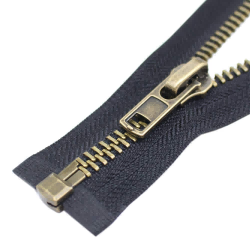
1. Precautions for daily use
Avoid excessive pulling: When pulling the zipper, you should first align the sprockets on both sides, gently pinch the slider and pull it along the trend, and never pull it hard when the sprockets are not aligned to avoid deformation of the sprockets or damage to the slider.
Prevent excessive load: The zipper is not a load-bearing component. Avoid using the zipper to directly pull heavy objects (such as only grabbing the zipper when lifting a bag full of items), otherwise it may cause the sprockets to fall off or the slider to break.
Close idle zippers in time: When not in use (such as empty bags and clothes), try to close the zipper to the top to avoid long-term exposure and deformation of the sprockets, and prevent dust and debris from entering the chain seam.
2. Cleaning and decontamination tips
Daily light wiping: Regularly use a dry cloth or soft brush to clean the dust and fibers (especially the fluff and fabric debris on the clothes) on the zipper surface and the gap between the teeth to prevent the accumulation of debris and cause jamming.
Targeted decontamination: If the zipper is stained with oil or stains, you can use a cotton swab to dip a small amount of neutral detergent (such as soapy water) and gently wipe it, then wipe it with clean water, and finally dry it. Do not use strong acid or strong alkaline detergents (such as bleach, disinfectant) to avoid corrosion of metal teeth or sliders.
Avoid long-term soaking: When washing clothes/bags with zippers, try to close the zipper before soaking to reduce the direct contact of detergent with the teeth; turn the clothes over when washing in the machine to avoid damage to the zipper and other clothes due to friction.
3. Lubrication and rust prevention
Rust prevention for metal zippers: Metal zippers (such as copper teeth and aluminum teeth) are prone to rust due to moisture and sweat. You can regularly apply beeswax, candles or special zipper lubricants (such as silicone-based lubricants) to the chain teeth: rub the wax on the chain teeth repeatedly, and then pull the slider several times to evenly distribute the lubricant and reduce friction resistance.
Anti-aging of resin/nylon zippers: This type of zipper is afraid of high temperature and direct sunlight. Avoid long-term exposure to the sun. Keep away from heat sources such as heaters and stoves when storing to prevent the material from hardening and brittleness.
4. Handling of special situations
Zipper jamming/misalignment: If the slider is stuck in the fabric, do not pull it hard. First, slowly pull the stuck fabric out of the slider, then align the chain teeth and pull again; if the chain teeth are slightly misaligned, gently straighten the deformed chain teeth (metal chain teeth can be carefully adjusted with needle-nosed pliers, and resin/nylon chain teeth should avoid excessive force to cause breakage).
The puller is loose/falling off: When the puller is loose, use needle-nosed pliers to gently clamp the two sides of the puller (pay attention to the strength to avoid clamping and being unable to pull); if the puller falls off, pry open the limit code (end fixing piece) at the top of the chain teeth, re-insert the puller, and then pinch the limit code to fix it.
Chain teeth fall off/break: If a few chain teeth fall off and do not affect the overall closure, they can continue to be used temporarily; if more fall off or break, it is recommended to replace the zipper (you can buy a zipper of the same model to replace it, or send it for repair).
5. Storage and storage requirements
Storage in a dry environment: When storing items with zippers for a long time, ensure that the zipper and the surrounding environment are dry. In humid areas, moisture-proof agents can be placed in the storage area to prevent metal parts from rusting.
Avoid extrusion and deformation: When storing folded clothes, avoid long-term extrusion of the zipper by heavy objects to prevent the chain teeth from bending or the puller from deforming.
The above methods can effectively reduce the wear and failure of the zipper, keep it in a smooth state of use, and extend its service life. The maintenance focus of zippers made of different materials (metal, resin, nylon) is slightly different, and the details can be adjusted according to the specific type (for example, metal focuses on rust prevention, while resin/nylon focuses on anti-aging).
FAQ
Zippers made of different materials have distinct vulnerabilities, and their care should be adjusted accordingly:
Metal Zippers (Copper, Aluminum, etc.): These are highly susceptible to rust and corrosion caused by moisture, humidity, and sweat. They require regular lubrication to stay smooth. You should periodically rub beeswax, candle wax, or a specialized silicone-based lubricant across the teeth, and then slide the puller back and forth a few times to distribute it evenly.
Resin and Nylon Zippers: These synthetic materials do not rust, but they are vulnerable to heat and UV exposure, which can cause them to harden, become brittle, and age prematurely. Maintenance focuses on protection rather than rust prevention: they should be kept out of direct sunlight and stored safely away from high-heat sources like heaters, radiators, or stoves.
If a zipper gets jammed or catches on surrounding fabric, you should never try to force or pull the slider hard, as this can permanently deform the sprockets or break the component. Instead, follow these steps:
Clear caught fabric: Slowly and gently wiggle the stuck fabric backward out of the slider rather than forcing the zipper forward.
Realignment: Once the fabric is free, ensure the teeth on both sides are properly aligned before gently sliding it along its path.
Minor physical adjustments: If individual metal teeth have become slightly misaligned, you can carefully straighten them using needle-nosed pliers. However, if dealing with resin or nylon teeth, avoid applying excessive mechanical force as they can easily snap or break.