
YIMA focuses on clothing accessories.
Main products are:hang tag,Hang Tag String,Heat Transfer Label,Leather/Metal Patch,Embroidery Patch,Packing Box & Bag,Print Label,PVC/Silicone Patch,Woven Label,etc.
Fabric tags are small labels or tags sewn or attached to textiles (such as clothing, bedding, curtains, etc.). They are widely used. The following is a detailed introduction to fabric labels:
Brand display:
Fabric tags are usually printed with the brand’s LOGO, name or logo, which is an important means of brand publicity and promotion.
Through labels, consumers can intuitively identify the brand of the product and enhance brand awareness and loyalty.
Identity identification:
In industries such as clothing and home textiles, fabric tags can be used as the unique identity of the product.
Through the information such as the code, barcode or QR code on the label, the detailed information such as the production batch, production date, and origin of the product can be traced, which is helpful for enterprise management and consumer inquiries.
Composition description:
The fabric label will indicate the fabric composition of the product, such as cotton, linen, silk, polyester, etc.
This helps consumers understand the material characteristics of the product and choose the product that suits them.
Washing instructions:
The label will also be printed with washing icons and instructions to guide consumers on how to properly wash and maintain the product.
This not only prolongs the life of the product, but also avoids damage or deformation caused by improper washing.
Size specifications:
In clothing products, fabric labels will also indicate the size specifications of the product, such as length, chest circumference, sleeve length, etc.
This helps consumers choose the right size when purchasing and improves the comfort and satisfaction of wearing.
Anti-counterfeiting mark:
Some high-end brands or special products will add anti-counterfeiting technology to fabric labels, such as special inks, laser anti-counterfeiting, etc.
This helps to combat counterfeit and inferior products and protect the legitimate rights and interests of consumers.
Quality assurance:
The label will also be printed with information such as product quality standards and certification marks.
This can reflect the company’s emphasis and commitment to product quality and enhance consumers’ purchasing confidence.
Advertising:
Fabric labels can also be used as a carrier for advertising, printed with the company’s slogans, promotional information, etc.
This helps to enhance the brand’s visibility and influence, and attract consumers’ attention and desire to buy.
Personalization:
As consumers’ demand for personalization increases, some companies also provide personalized customization services for fabric labels.
Consumers can add personalized patterns, texts or blessings to the labels according to their preferences and needs, making the products more unique and memorable.
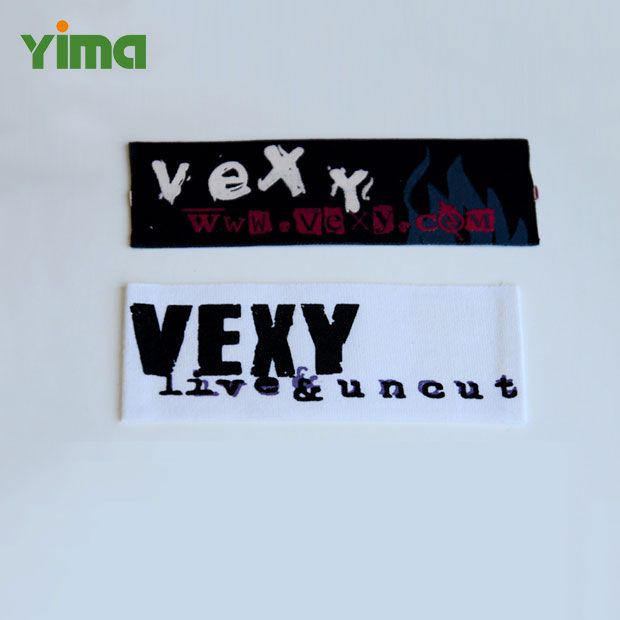
Woven labels :
Made through weaving technology, with a three-dimensional sense, commonly used in clothing, clothing accessories, bags, etc.
Woven labels mainly indicate the brand and size specifications, and may appear on the collar, cuffs or sides of clothes.
Cloth labels:
Labels made of cloth, there are many types, commonly seen on cloth products and some special materials, such as PU leather, etc.
Cloth labels may appear on feed bags, cloth products and other items.
Washing labels :
Specially used to print washing requirements and drying methods, usually appearing on clothes, home textiles and bags.
Washing labels can be washed repeatedly without fading or washing, which is very practical.
Material:
Fabric labels are made of a variety of materials, including paper, cloth, metal, plastic or PVC, etc.
Labels made of different materials have different textures, durability and scope of application.
Production process:
Printed label: Made by printing technology, rich in colors, suitable for labels of various materials.
Woven label: Made by weaving technology, with a three-dimensional sense, often used in high-end clothing and accessories.
Embroidered label: Made by embroidery technology, with delicate texture, suitable for occasions that need to show exquisiteness.
Heat transfer label: Made by heat transfer technology, suitable for a variety of materials, can quickly achieve personalized customization.
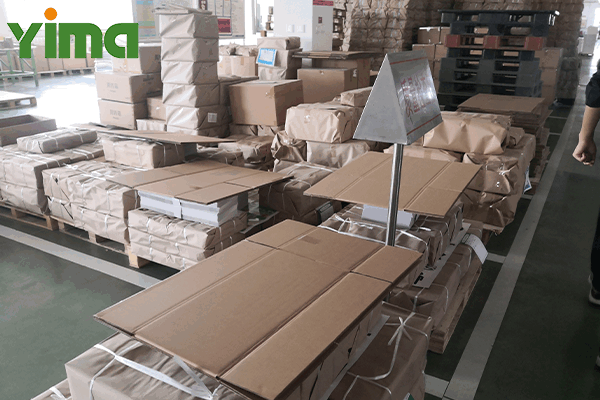
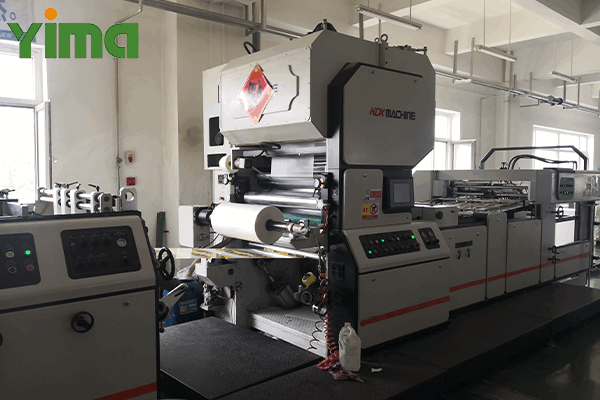
yima equipment


About delivery
How to shipping?
We need to consider both the shipping time and cost to select the best mode of transport, fast and economical.
We have a complete logistics supply system, including air freight, sea freight, railway, truck, express delivery, etc.
Our main partners include: DHL (Member), FedEx (Member), UPS, K&N, etc.
Shipping time reference (Door to door):
• Express (DAP): 4 – 8 working days.
• Air (DDP or DAP): 10 – 12 working days
• Railway & Truck (DDP): 30 – 40 working days
• Fast ship(DDP): 24 – 28 working days
• Ship (DDP): 40 – 50 working days
The finial time depends on the goods weight and country/region.
