YIMA - Focused on clothing labels & accessories for 20 years
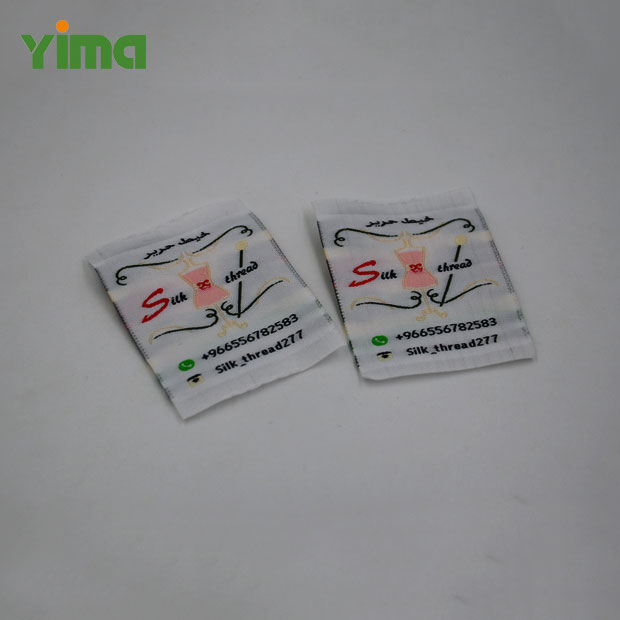
made by sewing labels
YIMA focuses on clothing accessories. Main products are:hang tag,Hang Tag String,Heat Transfer Label,Leather/Metal Patch,Embroidery Patch,Packing Box & Bag,Print Label,PVC/Silicone Patch,Woven Label,etc.
Sewn labels are identification labels fixed on clothing, bags, home textiles and other items through sewing technology. Their main functions include:
Brand identification: marking brand name and LOGO to enhance brand recognition.
▶ Example: Luxury brand clothing often has exquisite brand woven labels sewn on the inside.
Information transmission: providing product-related information, such as material, size, washing instructions, origin, etc.
▶ Example: Care Labels are fixed by sewing and mark washing precautions.
Decorative function: Some handmade products or designer brands will use special sewing label as decorative elements to enhance the aesthetics.
Sewing label production process
Design stage:
Use design software (such as Adobe Illustrator) to draw the label pattern and determine the size, color, and text content.
The flatness and comfort after sewing need to be considered (such as clothing labels need to avoid irritating the skin).
Production process:
Woven label: The pattern and fabric are woven together through a jacquard loom, and a woven label mold needs to be made (high cost, suitable for mass production).
Embroidery: Use an embroidery machine to sew patterns on fabrics, which can be customized with complex patterns, suitable for small batches or customized needs.
Printing: Print the pattern on the fabric through screen printing or thermal transfer, which is highly flexible but less durable.
Sewing fixation: Use an industrial sewing machine or hand sewing to fix the edge of the label at the product seam (such as the side seam of the clothing, the inside of the collar).
Application scenarios of sewing labels
Apparel industry:
Brand main label (located at the collar or cuffs), washing label (inside seam), size label.
Luggage/shoes:
Brand label (sewn on the bag body or the inside of the sole), material description label.
Home textiles/home furnishings:
Brand label or washing instruction label (sewn at the corners) for products such as sheets and towels.
Handmade products:
Accessories and fabric products made by independent designers or handmade enthusiasts can be uniquely highlighted with sewing labels.
Differences from other labels
Sewing labels vs. heat transfer labels:
Heat transfer labels are fixed by high-temperature ironing and do not require sewing, which is suitable for materials that are not resistant to high temperatures; sewing labels are more durable and suitable for products that are used for a long time.
Sewing label vs. embossed label:
Embossed label are attached by laminating, which have a strong three-dimensional effect but poor breathability; sewing label are softer and suitable for underwear.
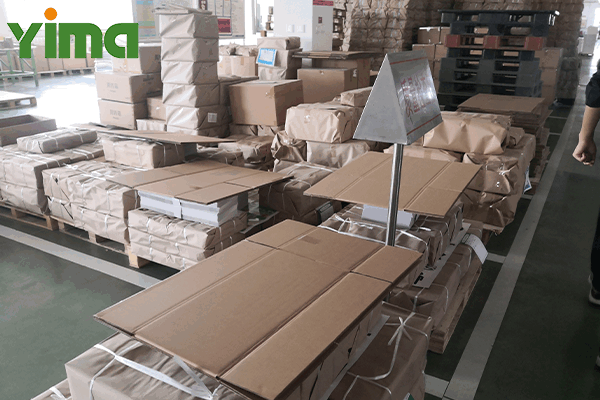
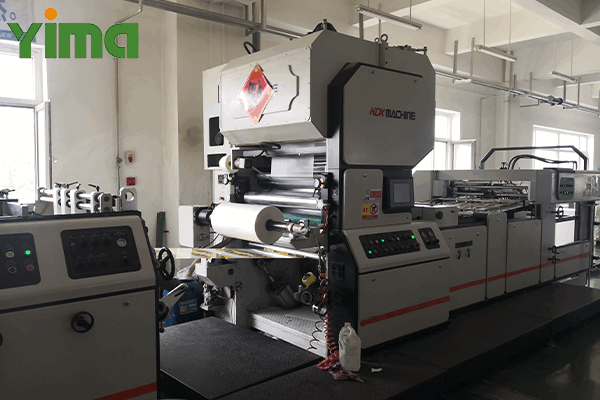
yima equipment
About delivery
How to shipping? We need to consider both the shipping time and cost to select the best mode of transport, fast and economical. We have a complete logistics supply system, including air freight, sea freight, railway, truck, express delivery, etc. Our main partners include: DHL (Member), FedEx (Member), UPS, K&N, etc.
Shipping time reference (Door to door): • Express (DAP): 4 – 8 working days. • Air (DDP or DAP): 10 – 12 working days • Railway & Truck (DDP): 30 – 40 working days • Fast ship(DDP): 24 – 28 working days • Ship (DDP): 40 – 50 working days The finial time depends on the goods weight and country/region.